Daddy’s Last Vote

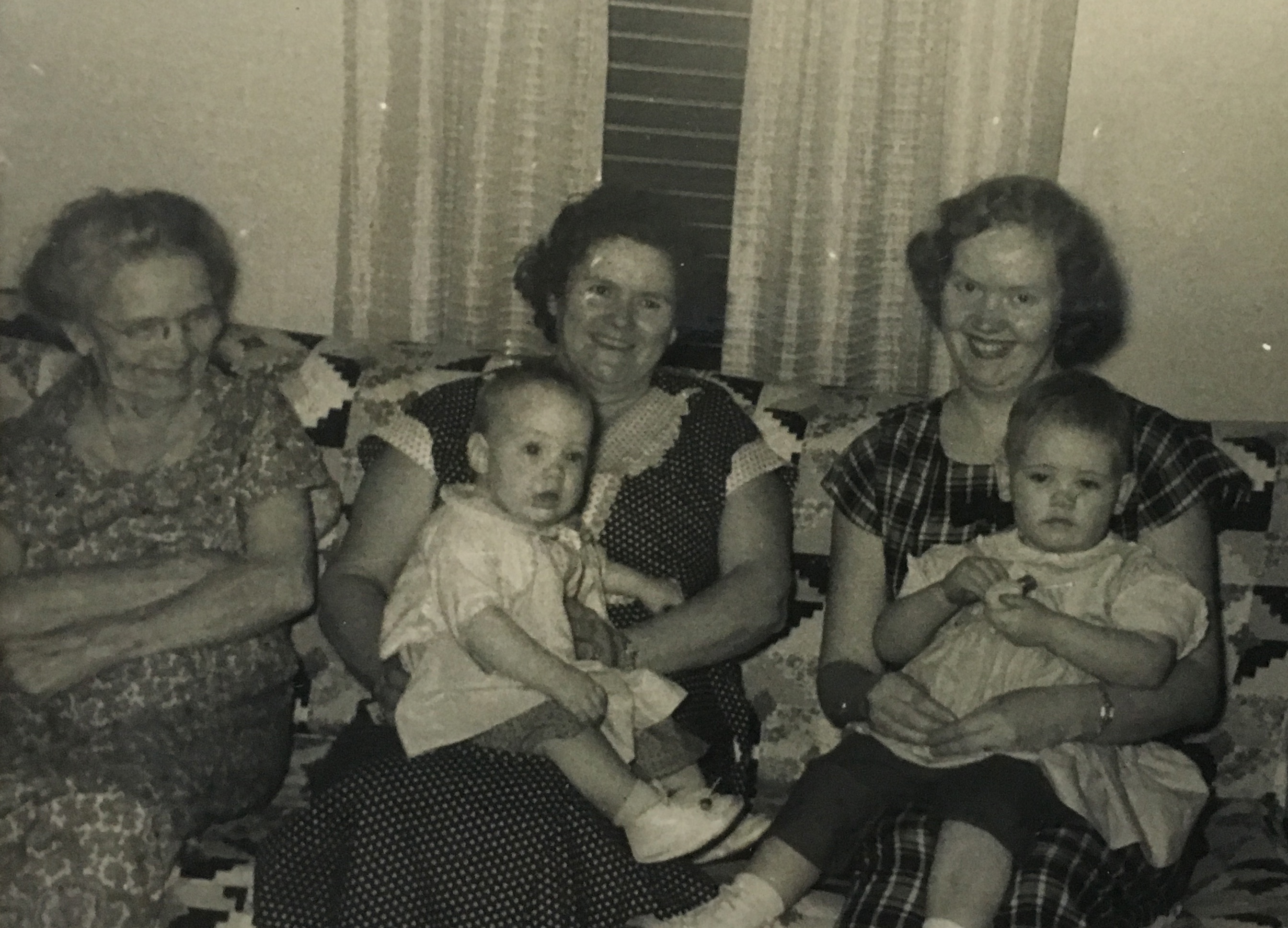
Four generations of South Knoxvillians in 1960: my mother (with me on her lap, on the far right) seated beside her mother (with my sister on her lap in the center), and her grandmother (far left).

Four generations of South Knoxvillians in 1960: my mother (with me on her lap, on the far right) seated beside her mother (with my sister on her lap in the center), and her grandmother (far left).

When I was a child in the early 1960s, my world was a fog of (1) trying to figure out the inexplicable behavior of the adults around me, (2) hoping to discern what they wanted me to do, and (3) doing it as expeditiously as possible.

During my childhood, the scariest person in my world was the white-haired principal of our elementary school named Miss McCallie (pronounced Ma-call-e). All I can remember about her is that she terrified me, insisted that every child clean their plate (no matter how nauseating and allergy-causing the food), and her favorite song was “Dixie”– the song that typified the Confederacy during the Civil War. Her preference for the song permanently ruined it for me.

Proving that the schisms that existed in Knoxville, Tennessee, during the Civil War continued a hundred years later, our high school chorus teacher had us sing the Union’s quintessential war song “Battle Hymn of the Republic” at the end of every concert. Although the Confederacy had its supporters in our town during the Civil War, East Tennessee had a national reputation for being staunchly Republican and when the Yankees took over the city in 1863, most of the populace welcomed them with open arms.

The Confederate dead at Marye's Heights, Fredericksburg, Virginia, 1863.

The Confederate dead behind the stone wall at Marye’s Heights, Fredericksburg, Virginia, 1863.

Besides the hatred caused by the two sides of the Civil War killing one another’s sons, husbands, fathers, uncles, brothers, cousins, and fiancés for five years, the war’s aftermath, the so-called Reconstruction Era, effectively disenfranchised and embittered Southerners in two important ways. Most of the war’s battlefields were in the South and thus Union soldiers’ dead bodies were scattered throughout Virginia, Tennessee, Georgia, South Carolina, and other Southern states. In order to ensure that gold-star families could have the bodies of their loved ones returned to them, the U.S. government paid to find, transport, and honorably bury the Northern dead. They also awarded pensions and widow’s benefits to Union soldiers and their families. Neither pensions, widow’s benefits, nor any sort of aid with finding, transporting, or burying the South’s dead was given by the federal government, however. It was as if the former Rebels were not truly citizens of the country the Union fought so hard to preserve.

Daddy's mother Darcas (second from left) and her family in 1906.

Daddy’s mother Darcas (second from left) and her family in 1906.

Further the economic upheaval, cities and towns burned and looted, and the poverty and starvation that gripped the South in the wake of the war was still felt well into the 21st Century. Hundreds of thousands of Southerners died from nutritional deficiencies such as pellagra psychosis (leading to disfiguring skin conditions, insanity, and sometimes death) caused from a diet that relied too much on nutritionally inferior corn.

My family was especially affected by the disease. According to her death certificate, my paternal grandmother, Darcas (Daddy’s mother), died of pellagra psychosis in 1935, just four months after giving birth to my father. And unbelievably she died in Knoxville’s work house for the poor called the George L. Maloney Home.

My grandmother’s story is perhaps an instructive one. Her grandfather, a Virginian named Lindsey Montgomery, fought for the Confederacy. When she was a young girl, Darcas’s father, John, lost the family farm in Carroll County, Virginia, so she and her sister worked in a cotton mill as child laborers.
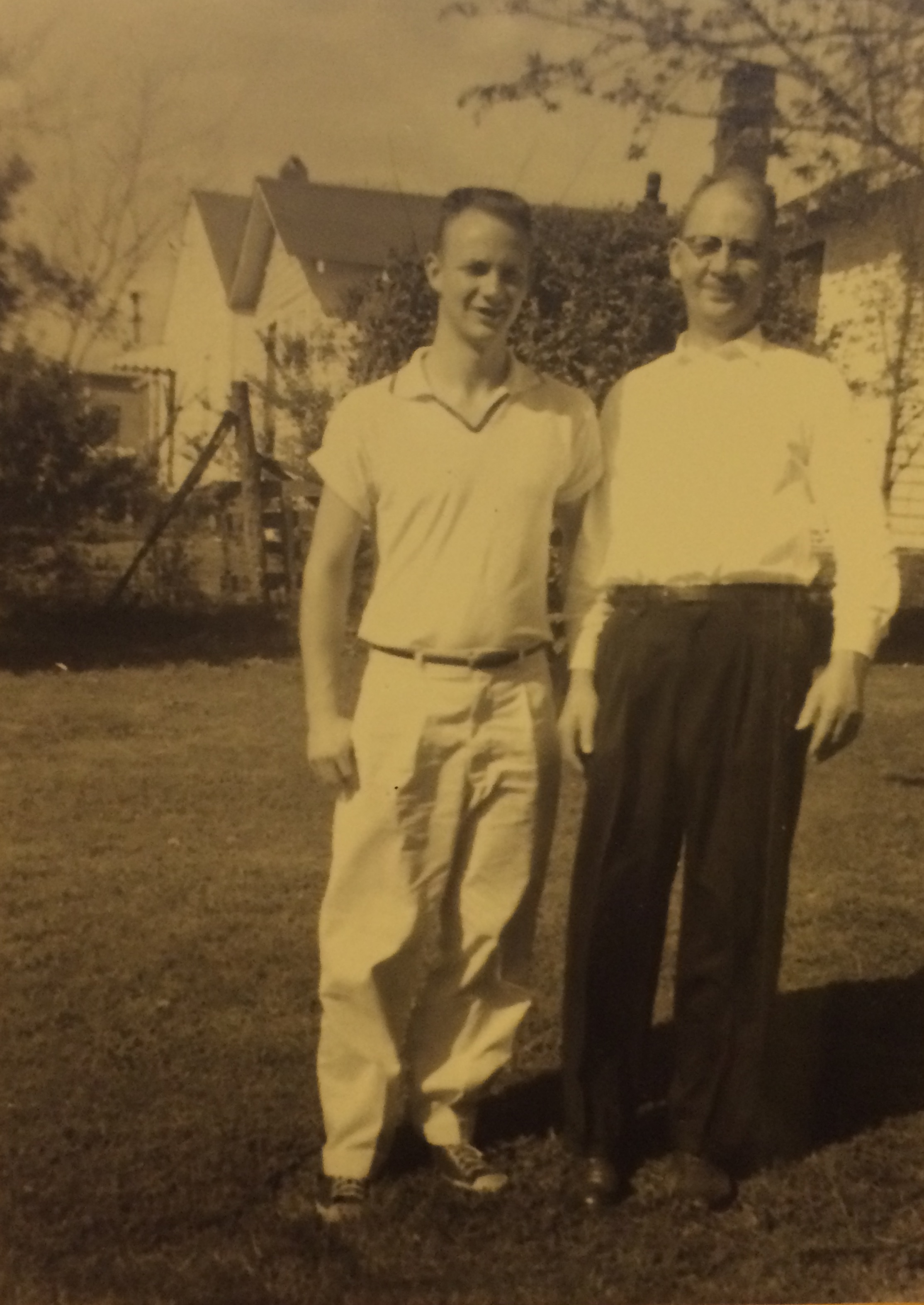
Daddy and his father Hodge just before my parents were married, probably 1955.

Daddy and his father, Hodge, just before my parents were married, probably 1955.

Daddy’s father was illiterate, but my father attended school until he dropped out of high school in the 10th grade. I doubt Daddy’s father ever voted, but when I was growing up Daddy referred to himself as “a Nixon man”. Although my first presidential vote was for fellow Southerner Jimmy Carter, I’m sure Daddy voted for the Republican challenger, Gerald Ford.

Somewhere in the ’80s, however, my father’s political allegiance changed as he began to see that the Grand Old Party of his youth was not taking care of lower-middle-class people such as my parents. Thus, Daddy started voting for Democratic candidates such as Presidents Bill Clinton and Barack Obama–and the Democrats who were not successful in their quest to lead the country, such as Michael Dukakis, Walter Mondale, and John Kerry.
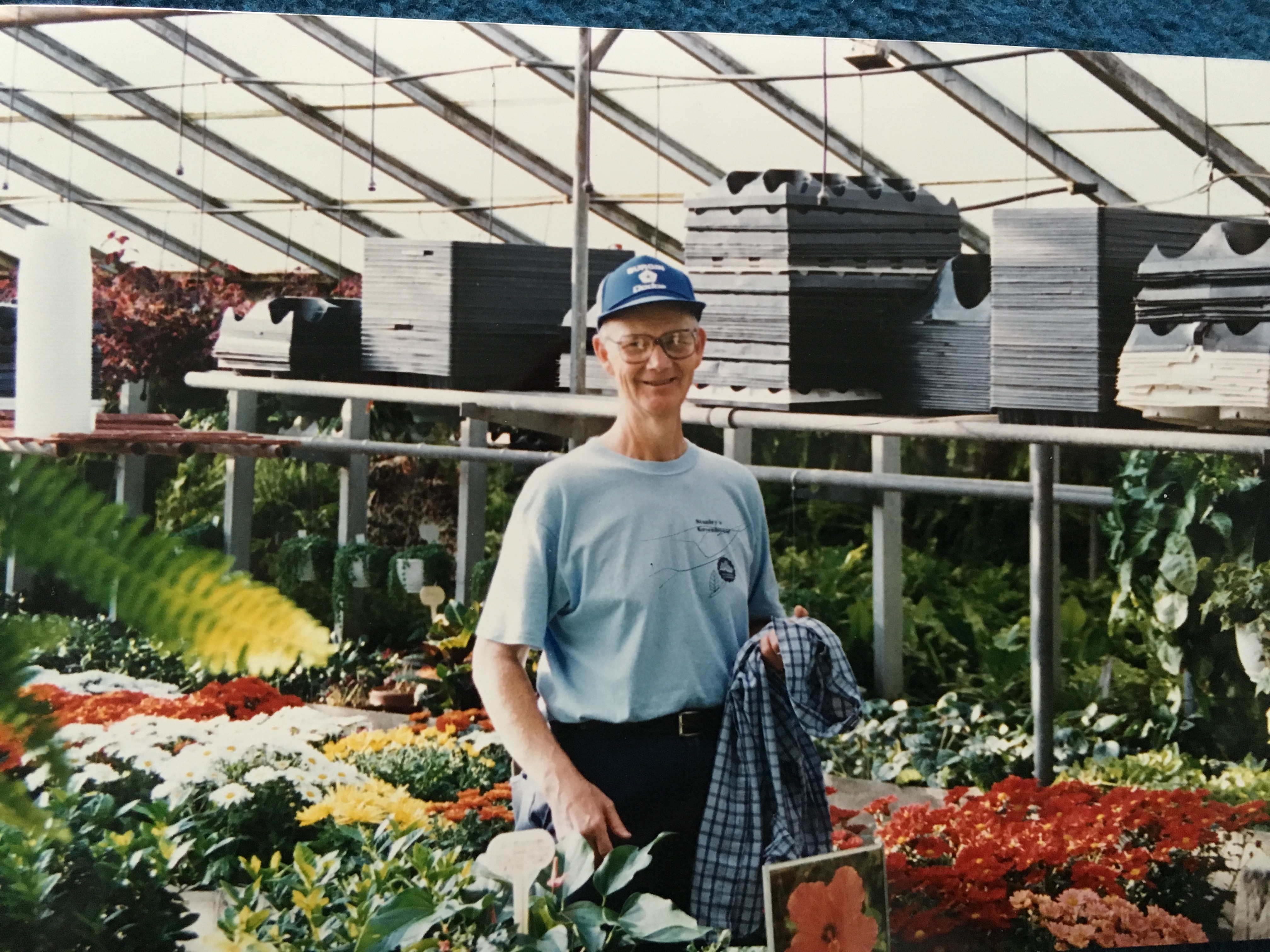
Daddy at his last job at Stanley's Greenhouse, early 2000s.

Daddy at his last job at Stanley’s Greenhouse, early 2000s.

In the last few years, Daddy’s health began to falter and his world became smaller. He no longer wanted to go to church, and he could not drive himself to the movies which had been his great passion. He lost so much weight that finally it was no longer possible for Mama to care for Daddy at home. A year ago we placed him in the best senior care facility we could find that was within close driving distance for Mama.

For awhile Daddy flourished in his new environment. He loved the food; he found some of his fellow residents delightful; and Mama was there for him every day to make his life full and comfortable. He gained weight and his health improved.

Three months ago, however, Daddy fell and broke his hip. Although the minimally invasive hip replacement surgery was completely successful, we began to understand why so many people say the beginning-of-the-end for the elderly is a fall, resulting very often in a broken hip. And so it has been for Daddy who, at first seemed to come through the surgery very well, but has since suffered a downward trend that we have not been able to halt.
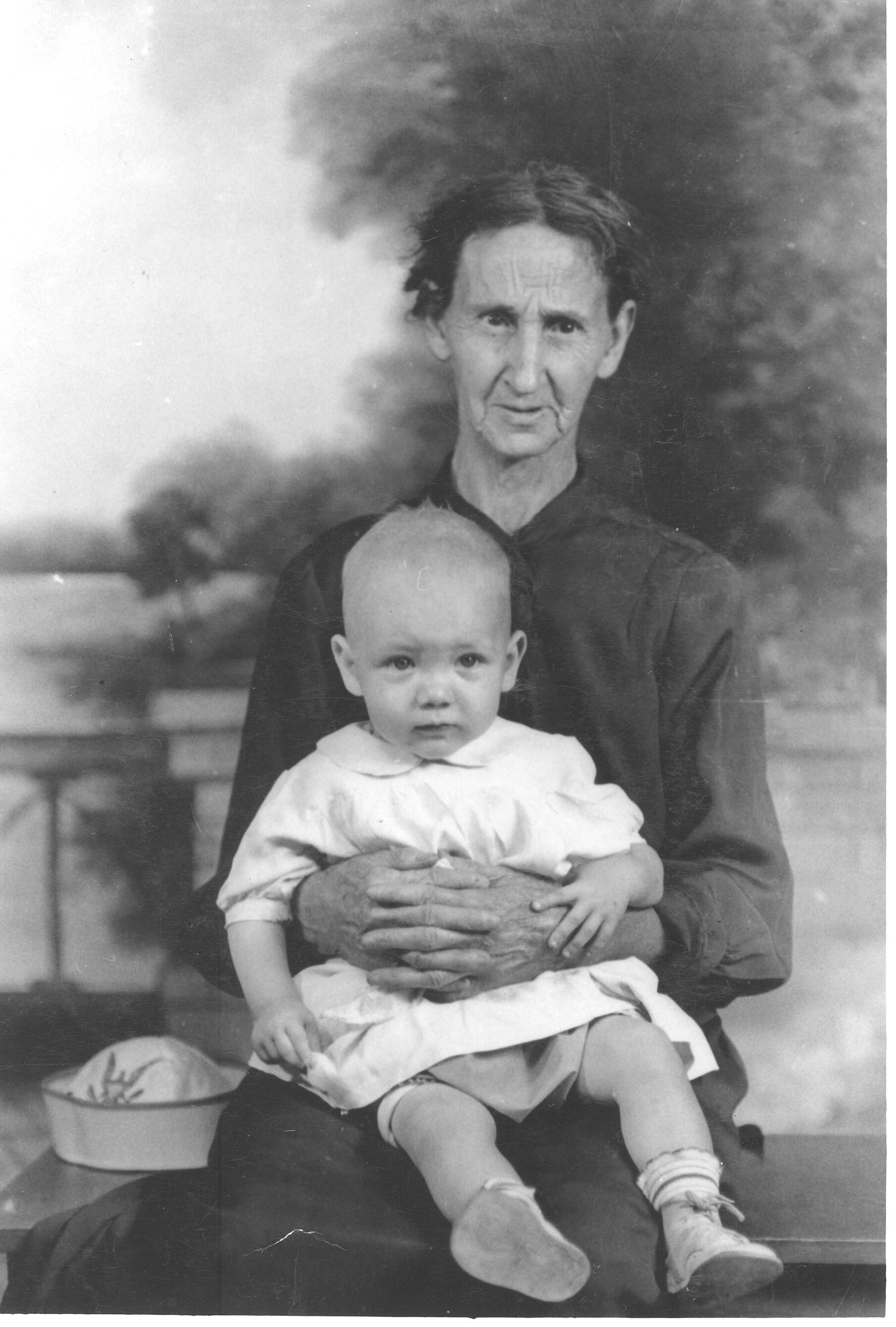
Daddy on his grandmother's lap, early 1936.

After his mother died when he was 4 months old, Daddy was raised by his paternal grandmother. Photo probably taken in 1936.

My father keeps losing weight, and he has become so frail that he can no longer walk. He can barely move himself as Mama and I work together to try to get him into bed at night after dinner. He is so tall and has such large bones that Mama and I can barely get him into position in bed–even when he says he is comfortable, his knees are still sticking up because he cannot move himself and we cannot get enough leverage to move him so his head will be at the top of the bed.

Yet Daddy’s mental and social capacity soldiers on as he asks me where my husband is traveling and how I am progressing from foot surgery. He reaches out to his fellow residents at meals and tries to soothe them when they are upset. He smiles and winks at me; and I smile and wink at him. Daddy repeatedly thanks me for being with him, saying my presence makes his day. He thanks me profusely for everything I do to make his life better and for bringing him goodies that he might decide to eat (honeybuns and chocolate muffins–his beloved chocolate!) or drink (apple juice and nutritional supplements).

The other day, Daddy and I were sitting at the dinner table of his facility, and he turned to me and said, “Anna, what do you think about this presidential race?”

Not wanting to upset him, I remained noncommittal and said, “Oh, it is very exciting, isn’t it, Daddy?”

He said firmly, “Well, I am for the woman because I think she is smarter than the man.”

To which, of course, I responded, “I agree with you completely, Daddy. I am for the woman too, and I think she is smarter than the man. You are so right, Daddy.”

Daddy acting as best man on March 5, 2016, at my son Justin's wedding.

Daddy acting as best man at my son Justin’s wedding, March 2016.

Since my father had expressed a preference in the election, I began to muse about how to ensure that he would be able to vote. Since he is too frail for us to take him to vote, I decided to request an absentee ballot for him from the local election commission. In response they sent a letter saying that Daddy would have a chance to vote at his facility on October 28. It was not clear how this miraculous voting moment will happen–will special officials come to Daddy’s senior living facility and ask his preference? Will they set up voting booths in Daddy’s facility to accommodate the 60 or so infirm seniors housed there?

Increasingly it has become an ever-changing situation as Daddy’s frailty and lack of strength becomes more pronounced with each passing week. Will he be alive in late October? Will he make it to Election Day? We don’t know the future for him, but I would so much like to make it possible for him to cast his vote. This would be his first vote for a woman president, just as my Southern gentleman of a father voted for the first black president eight years ago, and then voted for him again four years ago.

My father Roy being held by his father, 1935.

My father, Roy, being held by his father, 1935.

Daddy and Mama were raised in a segregated South around many racists. As I was growing up, our city became more desegregated under various court rulings, but many white families fled the city or sent their children to parochial schools so they would not have to attend school with black children.

Even an astounding 151 years after the Civil War ended, our supposedly “United” States are still torn asunder by racial strife and division. If President Abraham Lincoln visited our country today, he would be confounded to see that many of the problems that existed under his presidency are the same now: sectarianism, bigotry, absolutism, political turmoil, politicians unable to compromise for the greater good, and fear of people from another “tribe” whether they have a different color of skin or have recently immigrated to America seeking a better life.

I cannot fix all the vitriol and poison I see around me. Sometimes I despair and cannot resolve how to go forward in a supposedly civilized country where so much hatred is spilling onto the streets. It made me sick to my stomach to see a caravan of white supremacists on the main street of Knoxville last February with their huge “Don’t Tread on Me” flags, hatred on their faces, and their radicalized search for revenge for what they believe they have lost. I can only think that much of their hatred stems from their fury that a black man has been our president for nearly eight years and there has been nothing they can do to change that.

Daddy at Christmas 2000.

Daddy, Christmas 2000.

What I can do is try again to get my father an absentee ballot so that in one particular area of his life–his right to decide who to vote for, and to cast his vote accordingly–Daddy can still be a full citizen of his country. This will probably be his last vote, and just maybe, his most important one.

Anna ~ 9/30/2016

 

Posted in Autobiographical, Childhood, Courage, Family, Freedom, Knoxville, Op/Ed Thoughts, Tribute | Tagged , , , , , , , , , , , , , | 1 Comment

The Difference Between Good and Evil

How can you not help, if a child asks? Someone who does not know the difference between good and evil is worth nothing. In fact, such a person belongs in a mental institution.

Mieczysław Kasprzyk, a Polish farmer who risked his life to hide Amalia, an 11-year-old Jewish girl, on his family’s farm

An Italian child and his mother in Amatrice, Italy.

An Italian child and his mother in Amatrice, Italy.

In many parts of the world, people of many races and backgrounds are struggling. People have been driven from their homes by civil war, hatred, and unnatural “natural disasters” such as the flooding in Louisiana and earthquakes in Italy.

The 5-year-old Syrian boy Omran Daqneesh who was found in the bombed-out rubble of his former home in Aleppo, Syria.

The 5-year-old Syrian boy Omran Daqneesh who was found in the bombed-out rubble of his former home in Aleppo, Syria.

A few days ago I saw a video of a tiny, 5-year-old boy who was discovered in the rubble of a bombed-out building in Syria. He was bleeding, in shock, and covered in dust from the explosion, and yet he said nothing.

He did not cry or latch onto his rescuers in panic–he simply regarded the world around him, filled with death and destruction, with a frozen look described by the cameraman who captured the child, later identified as Omran Daqneesh, in this moment.

He did not say a thing. He was traumatized from the shock. He did not scream, he did not call anyone, he had an odd stare . . . With his innocence, how he wiped the blood off with his hand. He was used to all this — the airstrikes, the blood — this is his daily life.

Mustafa al-Sarut, the 23-year-old Syrian cameraman for the Aleppo News Network

Omran and the other children caught in Syria’s Civil War–as well as those in the flood waters of Louisiana, and the earthquakes in Italy and Myanma–are changed by what they have seen, what they have experienced, what they have lost: homes, brothers and sisters, parents, and families. But they have lost something perhaps deeper, their belief that grown ups have an answer and a healing response for all the pain and suffering that happens in their world. Trauma at a young age does indeed scar a child for life.

Historically children and women have been the collateral damage of war–and peace, for that matter. Neither cirstumstance has been terribly kind to women and children who are not always safe in their own homes.

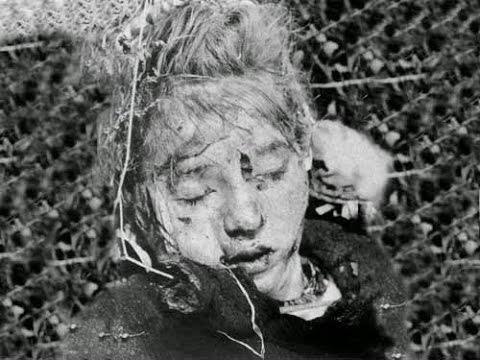
A child killed in World War II.

A child killed in World War II.

During World War II, the children of Europe–whether they were Polish, gypsies, Jewish, handicapped or the children of people who simply tried to help their neighbors during the organized murder that became Germany’s Third Reich–were pawns trapped in a maelstrom of terror. So many hunted, hungry, and orphaned children.

One Polish farmer, Mieczysław Kasprzyk, who lived with his family near Krakow was approached by Amalia Gelband, an 11-year-old Jewish girl whose entire family had been killed by the Germans. Kaspryzyk knew Amalia’s family, was appalled by the inhumane actions unleashed in Poland, and when she asked for help, he hid her in the attic of his farmhouse. After the war she reinvented herself as a Catholic girl named Helena Kowalska, was placed in an orphanage, and eventually escaped post-war Poland for a life in Brazil.

My father Roy being held by his father, 1935.

My father Roy being held by his father, 1935.

As for my father, when he was four months old his mother died from insanity (according to her death certificate) caused by an extreme form of nutritional deficiency called pellagra psychosis.

We do not know if she was suffering with this mental illness while she carried Daddy, or whether bringing the pregnancy to term took the last bit of her body’s resources and she succombed to the disease.

In 1935 she died in the poorhouse here in Knoxville which was called the George Maloney Home. Actually it was more of a workhouse according to the archival sources we researched. The inmates there were the poor of the surrounding area who were forced to work in the fields as slave labor. It was not clear exactly how people were consigned to this fate, and it is equally unclear why Daddy’s mother, whose death certificate said she was mentally ill, died in such a place when her husband lived in a rented house in South Knoxville.

Daddy on his grandmother's lap, early 1936.

Daddy on his grandmother’s lap, early 1936.

My father could have been raised by his mother’s Mormon relatives in Kingsport, Tennessee, but his father would not hear of it. Instead he was raised by his hellion of a grandmother who lived together with her two sons: Daddy’s father Hodge and his alcoholic brother.

When Daddy was five, his grandmother died, and he was raised in the chaotic home of his illiterate father, who worked as a butcher at a packing company, and his brother who may or may not have been a bootlegger.

Children are the loose change in the pockets of the adults around them who make devastatingly poor decisions.

And heartbreakingly I know so many women who were sexually abused as children: two by their grandfather, one by her brother, and as for me, I was told that we were playing doctor when an older neighbor boy decided to take violate me with a stick in our next door neighbor’s basement. I was only 5 years old and had been taught never to make anyone uncomfortable, so I went along and ended up feeling confused, hurt, ashamed, and guilty. Because as children whatever happens to us, we feel it is our fault. I have never lost the shame, but was far luckier than the girls who were abused by family members or clergy which promises another whole layer of grief and betrayal.

What can we do? My answer was to rear two sons and teach them that no person—whatever his or her gender, sexual orientation, color, background, nationality, religion, or level of povert—is disposable.

Racism is a form of death–and not just for the person who is denigrated, but also for the soul of the person who allows hate to control their heart–or for the people who allow hate to define their government.

~ Anna 8/28/2016

Posted in Childhood, Family, Happiness, Ideas, Op/Ed Thoughts, Uncategorized, Women | Tagged , , , , , , , , | Leave a comment

My Winking Valentine

My father Roy being held by his father, 1935.

Daddy in the arms of his father Hodge in 1935.

Yesterday I went to see Daddy who was sitting in the chair of his transitional care unit (TCU) room at the hospital. TCU, yes, but not the university located in Ft. Worth, Texas.

With his brand new hip and Mama always at his side, Daddy looks forward to weekdays with his favorite occupational therapist. On the weekend and every day of the week he waits, with varying degrees of patience, for the three meals carried to his room by the overworked and perennially short-staffed hospital crew.

Daddy and his father in the backyard of my mother's home, around 1955.

Daddy and his father in the backyard of my mother’s home, around 1955.

Unlike his breakfast and lunch which Mama said had come early that day, dinner was an hour and 15 minutes late by which time Daddy had given up and demanded that Mama put him in bed. His head had been bowed for quite some time and he had been drowsing while sitting up until he finally announced, “I want to lie down,” with that occasional edge of frustration to his voice that signals possible trouble ahead.

Because he hears with only one ear–and wears an ear plug in that ear to block out noise–Daddy can understand only about half (or less) of what we say. Mama proposed that she feed him in bed when the food came, and he thought she was suggesting he stay in the chair waiting for food, so he frowned and became testy with her as he does with any of us if we don’t hop-to with what he wants at the appropriate–or inappropriate–time.

My podiatrist snapped a photo to let me see inside of my foot where the cartilage is worn away.

My podiatrist snapped a photo to let me see inside of my foot where the cartilage is worn away.

With the help of his walker and Daddy shuffling his feet ever-so-slowly, Mama was able to get him into the bed. I wasn’t any help to her because I had foot surgery a week and a half ago and sat elevating my foot in its protective boot as directed by my podiatrist.

I’d like to say I injured myself doing something rather fabulous and delightful on the slopes of some Alpine ski resort, but I’ve never snowskiied in my life. In fact, like so many other mysteries in life, we have no idea why the cartilage in that particular errant toe wore away while the other nine, of similar age and temperament, looked on with great innocence as the offender caused so much fuss and bother. So that’s what the inside of my foot looks like. Yep, the photo my surgeon took when he opened me up looks like worn-off cartilage. But it took quite a bit of explaining for me understand what my podiatrist mean by “frontier medicine” as it relates to my foot. Oh, the risks of walking while having toe cartilage–and then surprisingly not. I’ll be more help to Mama and Daddy in a few weeks after I completely heal (fingers crossed).

Daddy sitting beside his bed at his senior living facility a few weeks before his hospitalization.

Yes, he does look younger! Daddy models his fresh haircut a few weeks before his recent hospitalization.

I notice that Daddy’s hair has grown out since the last time I cut it. His hair grows so much faster than my husband’s. I could trim Daddy’s hair twice in the amount of time Kurt’s hair needs only one. When I cut Daddy’s hair a few times ago he said, “Do you think it makes me look younger?”

Of course I answered, “Yes, Daddy I think it does make you look younger! I like a man who is well groomed! You look so much younger–and so good looking too.” And I wasn’t just blowing smoke because Daddy has always been a strikingly handsome man. Tall, thin (except for a few years there in his 40s when the gravy and biscuits did not meet up with enough exercise), with a dash of patrician elegance for a man who grew up in great poverty without a mother.

I’ve often thought that Daddy would have made an excellent member of a royal family. He would have been kind, thoughtful, sensitive, and encouraging to his subjects. He would have graciously (and sometimes ungraciously if things were not up to his standard) accepted being waited on hand and foot–as Mama has always done for him, even when he was out of a job and she was the one working.

Mama and Daddy dodging rice as they dash for the getaway car after their 1956 wedding.

Mama and Daddy dodged rice as they dashed for the getaway car after their 1956 wedding. This photo shows that Daddy had lost a tiny patch of hair by the time he married at the age of 21.

Daddy would have cared for each citizen of his country with great ceremony–that is until someone perpetrated a crime, then Daddy’s justice would have been swift and sure. Yes, in some ways he would have made a good king. However, when I was young and under his direct command, I suffered from his rule along with the other citizens (Mama and my sister Lisa) who could have enjoyed a good deal more parliamentary rights. Let’s face it, Daddy was often wrong on a particular fact (New York being not just east of Knoxville, Tennessee, but also north), but apparently the more wrong he was on a subject, the more adamantly he argued he was right–doubling down with his strong will. And yet, and yet, he has also been irresistible as well.

This morning I sat at breakfast and thought of how unaccountably warm, happy, and whole I feel when I just think of Daddy smiling at me. Yesterday at the hospital, he smiled at me; I smiled at him; he smiled and winked at me; I smiled and winked at him. We went on like that for a pretty long time, with the smiling and the winking, and being pretty damn happy to just be in each other’s company with the smiling and the winking.

Daddy being irrepressibly himself at wedding reception, 1996.

Daddy being irrepressibly himself at a wedding reception, 1996.

Mama seemed unaware of the smiling and the winking–or she let it go as one of the many details that are not particularly worth mention. I notice things and comment on them, such as, “Mama, you have been such a wonderful wife to Daddy.” If I think something–and it is positive–I share it, even if it is the not the kind of thing most people say in day-to-day conversation. At least folks where I come from.

Mama talks about people she knows who are in the hospital, have taken a turn for the worse, or died. She talks about her church, our family, and Daddy’s progress, but she doesn’t talk about how she feels about anything. It is not her way.

But talking about how I feel has been my way, more aligned with Daddy who has never lacked the ability to let you know how he feels about everything. So this morning, as I read a book review that mentioned one of my favorite songs, the opening lines put me in the mind of Daddy . . .

My Funny Valentine

My funny Valentine, sweet comic Valentine
You make me smile with my heart
Your looks are laughable
Unphotographable
Yet you’re my favorite work of art

Is your figure less than Greek?
Is your mouth a little weak?
When you open it to speak
Are you smiling?
But don’t change a hair for me
Not if you care for me
Stay little Valentine, stay
Each day is Valentine’s Day

by Lorenz Hart (lyrics) and Richard Rodgers (music), 1937

The world around us is troubled and scarred with violence and hatred, unrest and bigotry, prejudice and strife. At times my only way forward is through the little things such as light shimmering on the surface with a powerful foundation underneath–such as the way I love Daddy.

//Anna ~ 7/11/2016

Posted in Autobiographical, Beauty, Courage, Dementia, Family, Happiness, Love, Music | Tagged , , , , , , , | 2 Comments

I Will Remember

Here are Daddy and Mama visiting my sister Lisa and niece Abby at Stanley's Greenhouse a day and a half before his fall.

Here are Daddy and Mama visiting my sister Lisa and niece Abby at Stanley’s Greenhouse a day and a half before his fall.


A week ago, my sister Lisa called me and said our father had fallen on his way into his senior living facility after she and Mama had taken him outside. She said he crumpled, as if in slow motion, and fell onto a low concrete wall. She hoped the fall would result in nothing more than a bad bruise, but the facility’s doctor advised taking x-Rays to be sure.

Their findings were suspicious enough that they suggested further testing at the hospital. After much emergency room ado, we learned that Daddy had joined the one-third of Americans age 65 and over who suffer broken hips every year.

Dementia complicates Daddy’s situation considerably because he cannot fathom what is going on, wants to walk when he cannot walk, refuses to wear the protective socks to diminish the possibility of post-surgery blood clots, and wants his street shoes so he can walk back to his senior living facility. He doesn’t understand what the surgery was, and was quite shocked when he found that he had scar on his right side.

Daddy at Christmas 2000.

Daddy at Christmas 2000.

To those of you who have never been around dementia or Alzheimer’s disease, you may imagine that victims are completely vegetative and unresponsive. Yet, many patients with these diminished memories, live comfortably, and understand a great deal–especially about the past.

Coincidentally, Daddy’s fall occurred around the time that women’s sports legend Coach Pat Head Summitt was dying from Azheimer’s in another Knoxville, Tennessee, senior living facility. In Pat’s glory years, Daddy wouldn’t miss a home game, and he and Mama traveled around the world with the Lady Vol national-championship teams of the 1990s.

Now Daddy is learning to walk and regain his balance with his new hip, and Pat’s passing has been acknowledged and her life celebrated by people around the world.

While we were waiting at the hospital’s emergency room, Daddy turned to me and said, “You are the one that cuts my hair, right?”

“Yes, I am,” I said.

The groom Justin; his best man Daddy; and the groomsmen Carter, Mark, and Corey wait for the bride.

Daddy was best man at my son Justin’s wedding on March 5, 2016,

That conversation reminded me of the final scene of the final episode of “Wallander” on PBS. Kenneth Branagh plays the title character Wallander, who is trying to come to terms with being diagnosed with Alzheimer’s.

Wallander stands on the beach communing with the spirit of his long-dead father and said, “It’s just moments now, Dad. Everything. It’s just moments now. They don’t join up.”

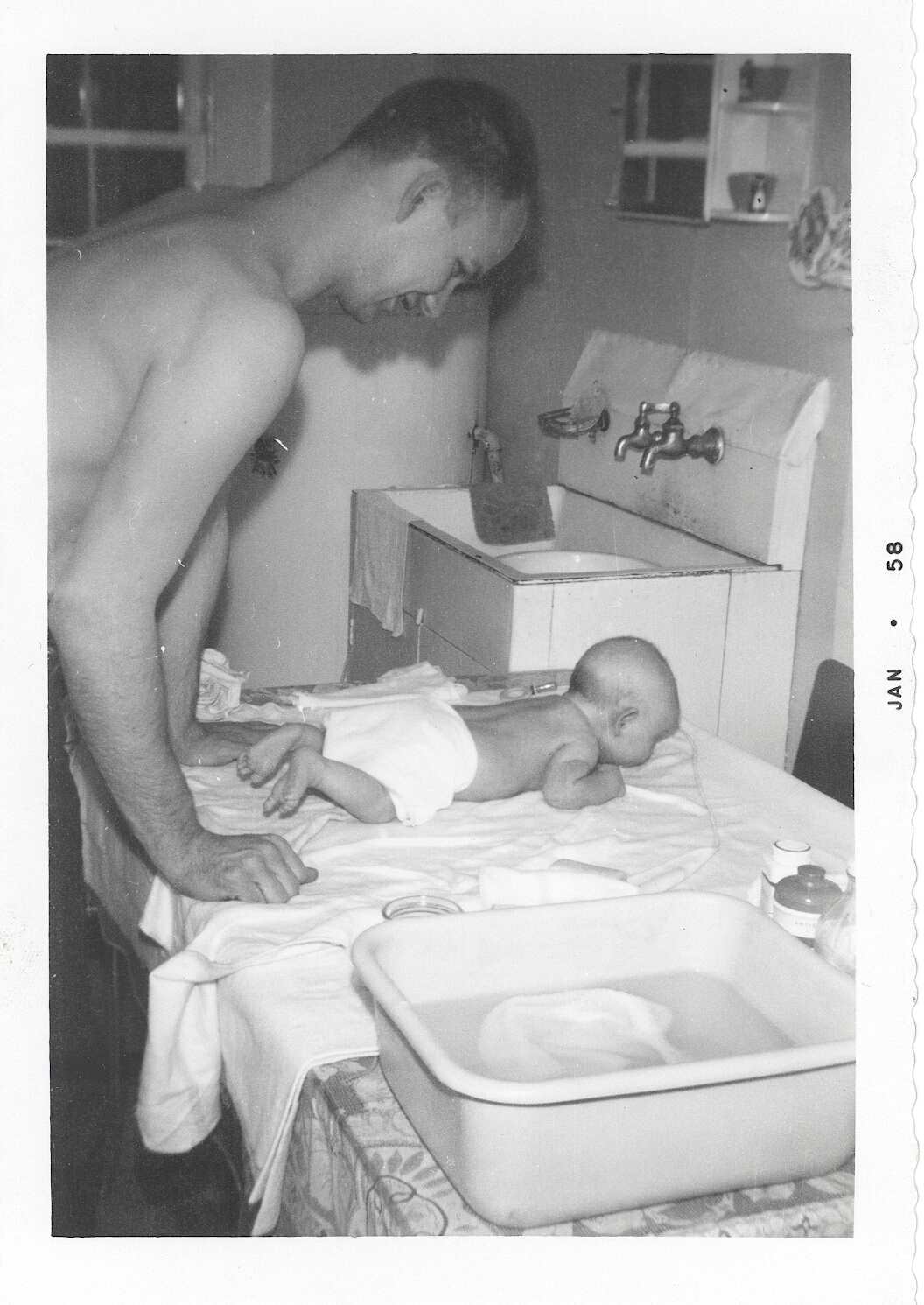
Daddy giving me a bath when I was a baby, 1958.

Daddy giving me a bath when I was a baby, 1958.

His father said in return, “What don’t?”

“My memories, my life it doesn’t join up. I can’t remember,” said Wallander.

His father replied, “Someone else will remember. Someone else will remember for you.”

That’s what I do for Daddy; I remember for him.

//Anna ~ 6/30/2016


Posted in Alzheimer's, Autobiographical, Bruce Springsteen, Childhood, Courage, Family, Happiness, Love | Tagged , , , , , , | 4 Comments

Living in a Self-Help Storage Facility

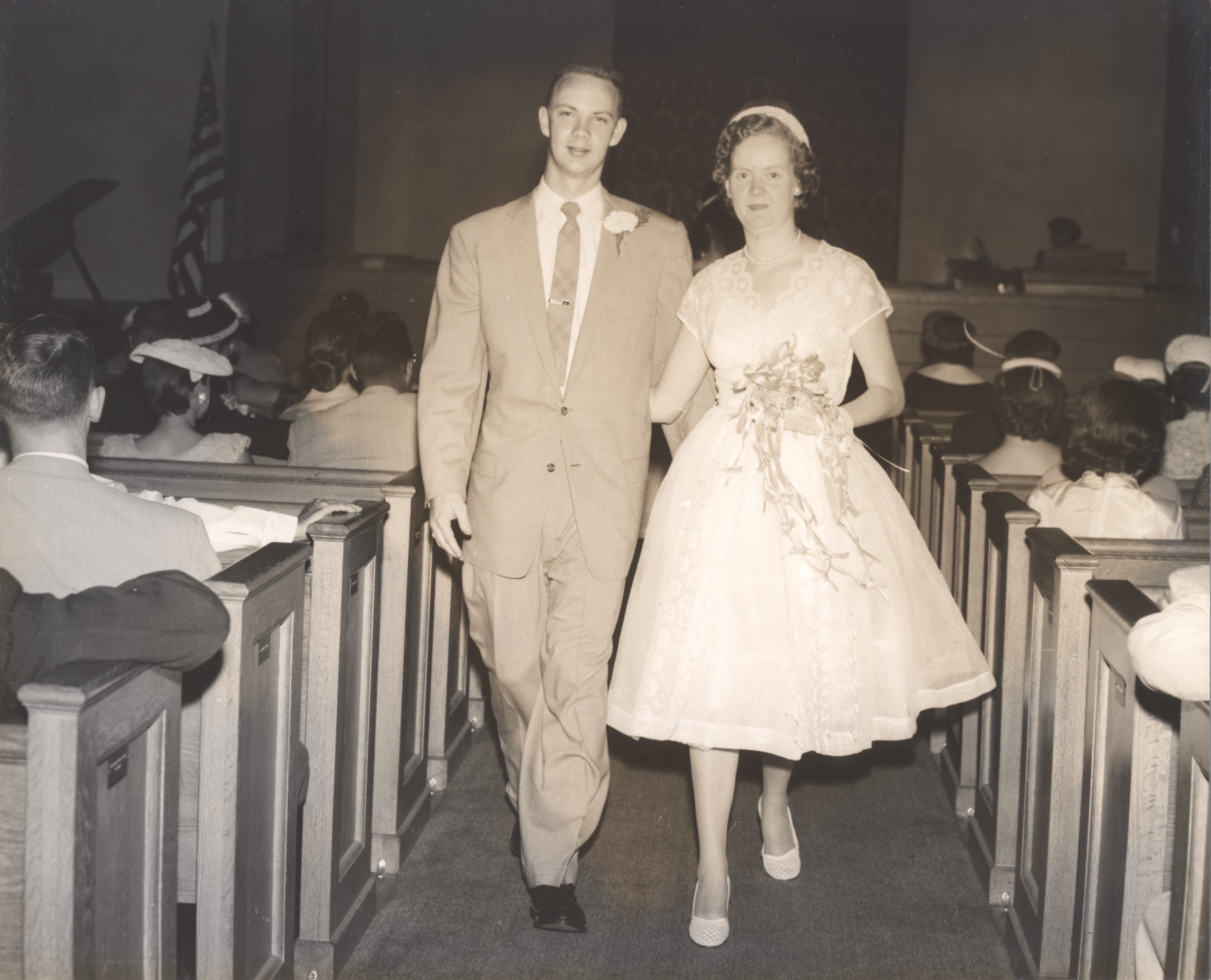
Daddy and Mama on their wedding day, June 15, 1956. They will have been married 60 years on June 15, 2016.

Daddy and Mama on their wedding day, June 15, 1956. They will have been married 60 years on June 15, 2016.

A month or so ago, my father’s senior living facility scheduled a family members meeting. Although Daddy–due to his dementia–is in the memory care “retreat” area, the meeting also included family members from the assisted living side of the facility. Facilitated by an intern (who explained she would be leaving later in the week) and the facility’s programs coordinator, the meeting allowed members to talk about their experiences and help each other with the myriad details and murky bureaucracy that surrounds senior care in the 21st century.

From the first family members’ meeting a month or so before this one, Mama and I learned a few helpful ideas to keep Daddy more safe. But on this particular afternoon we learned we were not alone in our frustrations with the facility.

Daddy with his beloved grandson Justin in 1996.

Daddy with his beloved grandson Justin in 1996.

A few minutes late to the meeting was Sherry (NOTE: not her real name–and I have changed the names of the other people I mention in this post, to protect their privacy), the daughter of one of my parents’ dear friends, Carl. He was originally in the memory care unit with my father, but his family had recently moved him to the assisted living area of the facility. Necessitating the move was the behavior of a paranoid woman resident who refused her medication for days, wandered into Carl’s room in the middle of the night, and began yelling incoherent accusations at his bedside. Upon hearing of troubling incident, Carl’s family moved him to the safer side of the facility–or so they hoped.

Sherry reported to us, however, that after Carl’s move, her father had rolled out of bed and lain in the floor for untold hours before the staff found him there and sent him the hospital for medical attention. When he came back from the hospital, he had no care plans and no one at the facility followed up on his after-hospital care.

Daddy at his last job before retirement, working at Stanley's Greenhouse.

Daddy at his last job before retirement, working at Stanley’s Greenhouse.

Further Sherry said that Catherine, a wheelchair-bound friend of Carl’s, fell and suffered an ugly cut. The wound site was not cleaned or cared for, and when Sherry inquired on Catherine’s behalf, she was told the facility’s on-site minders have no first aid supplies and seemingly no direct responsibility over patient health.

Neither do the unseasoned caregivers receive proper training, she learned. The just-graduated-from-high-school, teenage girls said they were told to watch a video on YouTube and a video from an Alzheimer’s website as their “training” to be the only caregiver responsible for 18 or so memory care patients at night, or one of two caregivers during the day.

Daddy and Mama at my son Justin's wedding in March 2016.

Daddy and Mama at their grandson Justin’s wedding, March 2016.

Luckily for Daddy, Mama is with him from 5:30 or 6:00 in the morning to 5:30 in the evening every day–except Sunday when she takes a few hours to dash off to church. Mama does not live at the facility. Although she spends most of her waking hours with Daddy, she prefers to go home to her own bed at night to sleep.

My mother is at the facility more than any of the other family members and observes the teenagers on their phones or watching TV instead of helping the mentally confused and physically feeble seniors in their care. As the only continuous presence in their lives, Mama is the unpaid caregiver who keeps, not just Daddy, but the other elderly patients out of harm’s way.

Mama told the group, just a few days before the meeting she intervened when a newly hired nurse erroneously tried to give medication to two patients that was meant for the other.

Daddy acting as best man on March 5, 2016, at my son Justin's wedding.

Daddy acting as best man on March 5, 2016, at my son Justin’s wedding.

Sherry summed up her frustration that the facility had given her the impression that it was a full range-of-care senior living home, when it is not equipped or properly staffed to do that job. She asked that the facility explain its areas of  responsibility so she would know how to fill in the gaps on behalf of her father.

One of the meeting facilitators asked Jimmy, whose mother Rachel is also in the memory care unit, for his thoughts, and after a moment he said, “It appears to me what we have here is a self-help storage facility, and we were told it would be full service. It’s like going to McDonald’s for a meal, being told they sell hamburgers, and there are no burgers.”

Yes, I thought, he is exactly right. We were told we were placing our loved ones in a facility staffed with professionals equipped to handle the health and safety needs of elderly residents. What we got was a self-help storage facility for the aged.

Daddy in his baseball cap as he leaves his grandson's wedding on my sister Lisa's arm.

Daddy in his baseball cap as he leaves Justin’s wedding on my sister Lisa’s arm.

“But this facility is one of the best in town,” said one of the other family members. Yes, I thought, that is also true. Daddy loves the food; the facility is brand new and looks like a resort hotel. One of the senior caregivers is wonderful and caring of her charges–though she cannot work full-time on the floor at present because she hurt her arm moving heavy male patients (no male orderlies are hired to save money, I suppose). And to their credit the facility allowed an impromptu raised bed flower and vegetable garden. Carl was once a big gardener, so Sherry bought tomatoes, I brought tomato support cages, and Mama brought more tomatoes along with peppers, cucumbers, watermelon, squash, and flowers for the residents to plant. Mama waters the plants every morning. When Carl saw the garden, he was so moved, he sat quietly in his wheelchair and cried.

“We are a family here,” said Mama regarding the memory care unit. And they are a family–one without all the resources needed to keep everyone healthy and safe, just like too many homes in our country and the world.

Daddy on his grandmother's lap, early 1936.

Daddy on his grandmother’s lap, probably 1936.

Nearly every day Mama tells me someone at in the memory care unit has fallen, someone has gone to the hospital, or someone has been taken to a nursing home. And though the facility has not yet been open a year, quite a few residents have died–which cannot be directly attributed to the lack of attentive and knowledgable care, but it is also true that two inexperienced, barely trained young women cannot in any real way meet the health and safety needs of 22 residents with Alzheimer’s or dementia which is the number currently in my father’s memory care unit.

Perhaps this facility is among the best such homes in Knoxville. But that doesn’t mean it is a safe place for all its residents to live, but more an indictment of the level of care that our state and federal regulations allow.

Because elder care is all about money, we are supposed to understand–bean counting, numbers, and so on. It is not really about quality of life for the oldest members of our society. I hope that these facilities get better as the large Baby Boomer generation enters their sunset years. If only it were so now . . . for Daddy and the other sweet, fragile women and most wheelchair-bound men who live in his “home”.

After the meeting, I hoped I would hear a bit of feedback to the questions asked, the issues raised. But there has been a yawning silence from the leadership of Daddy’s home. And no more family members’ meetings have been scheduled.

//Anna – 5/31/2016


Posted in Autobiographical, Courage, Family, Knoxville, Love | Tagged , , , , , , , , , | Leave a comment

Much Ado About Laura and Tom Parkhill

Tom Parkhill, founder of the Tennessee Stage Company, on the day of his wedding to lovely-in-lavender Laura Regis.

On the day of their wedding, Tom Parkhill, founder of the Tennessee Stage Company, and his lovely-in-lavender bride Laura Regis holding a single iris grown by Tom’s father.

On Saturday, April 23, my photographer husband Kurt and I were ever-so-fortunate to capture love at its most rapturous when our friend Tom Parkhill married the love of his life, Laura Regis.

Yes, gentle blog readers, you heard me right: My adorable friend Tom, featured in two previous blogposts (urls shown below), has most sincerely and beautifully tied the knot with his lovely lady Laura:

Grace’s Son, Tom Parkhill

Stage Left With America’s Finest Character Actress, Dale Dickey

To those of you who have not read my earlier posts, I have known Tom since I was a small girl. Our parents were friends, and my first memory of Tom is how he would pester us when my sister Lisa and I played Barbies with his sister, Beth. During elementary and high school, Tom and I were in the same grade and graduated together from South High in Knoxville. Teachers and students alike knew Tom was a gifted dramatic and comic actor as he starred in most of the school plays.

The Tennessee Stage Company presenting the iconic three witches in Macbeth.

The Tennessee Stage Company presenting the iconic three witches in Shakespeare’s play “Macbeth”.

But after high school, Tom was that rare actor that made a living following his bliss. Not only did he have a successful acting career, but he came back to his hometown and founded the Tennessee Stage Company.

Since 1989, Tom and his theatre company have provided local actors and audiences an avenue to enjoy plays offered in unconventional settings such as Shakespeare in the Park and Shakespeare on the Square which is mounted in Knoxville’s downtown Market Square each summer. You’ve got to love a professional theatre group whose motto is: “Elvis is our co-pilot.”

https://tennesseestage.com/home/about-us-3/

Tom Parkhill as Elwood P. Dowd with Harvey, his 6-foot, 3-inch tall invisible best friend.

The portrait of Tom as Elwood P. Dowd used as a prop in the play “Harvey” which is also the name of his 6-foot, 3.5-inch-tall, invisible best friend.

Witty, self-deprecating, eccentric, and intensely private, Tom has seemingly floated through life inspiring his friends and fellow theatre folk alike to suffer from an intense lack of the proper adjectives to describe him.

It seemed like typecasting when a year or so ago he played Elwood P. Dowd, the role made famous by Jimmy Stewart in the 1950 movie “Harvey”. Throughout his life, Tom has always been very much and ever-s0-magically Tom, but he had never found the right “Jane” to his “Tarzan”.

As in the great bard’s romantic comedies, the plot thickened and love would have its way. During one of Tom’s Shakespeare on the Square events, he met Laura, a petite brunette full of energy and that certain unmistakable pizzazz that makes life sing. Smitten, Tom wrote her a letter asking her to go out with him. Having been disappointed a few times by love, Laura was gunshy, and her daughter Victoria advised her never to date “because, Mom, you are just too complicated”.

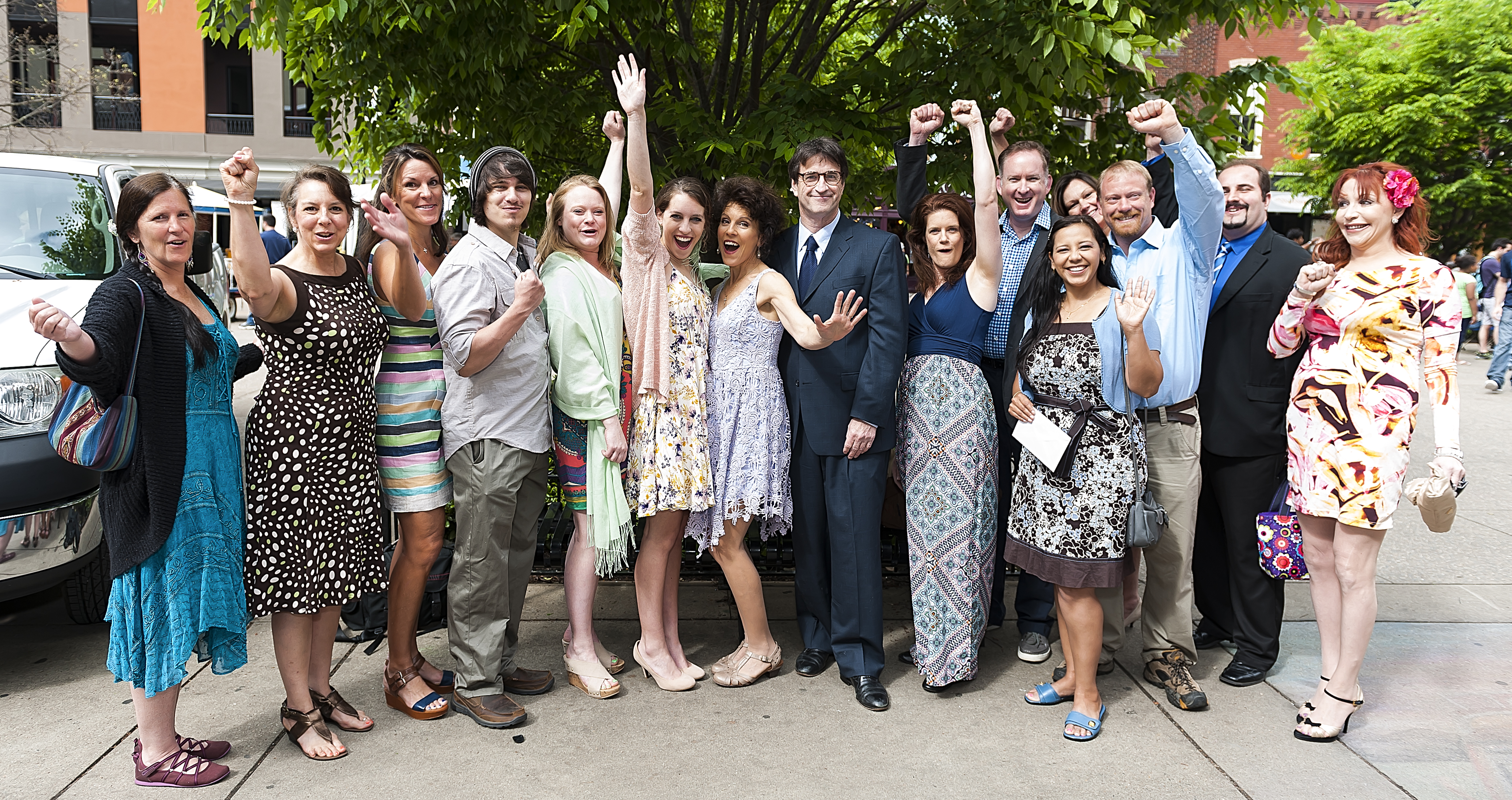
Most of the wedding party for Laura and Tom's wedding which shared Knoxville's downtown Market Square with our city's 15th annual Rossini Festival.

Most of the wedding party for Laura and Tom’s wedding, which shared Knoxville’s downtown Market Square with the thousands of people celebrating the city’s 15th annual Rossini Festival.

However, being a modern woman and intrigued by his kind letter, Laura decided to Google her would-be suitor to get more information. Online she found my blogpost featuring a photo of Tom with his friend and fellow, from-Knoxville-thespian, the award-winning stage and screen actress Dale Dickey. In the post, I mentioned Tom in affectionate and glowing terms–and in the photo Tom looked so endearingly sweet, she decided to go out with him.

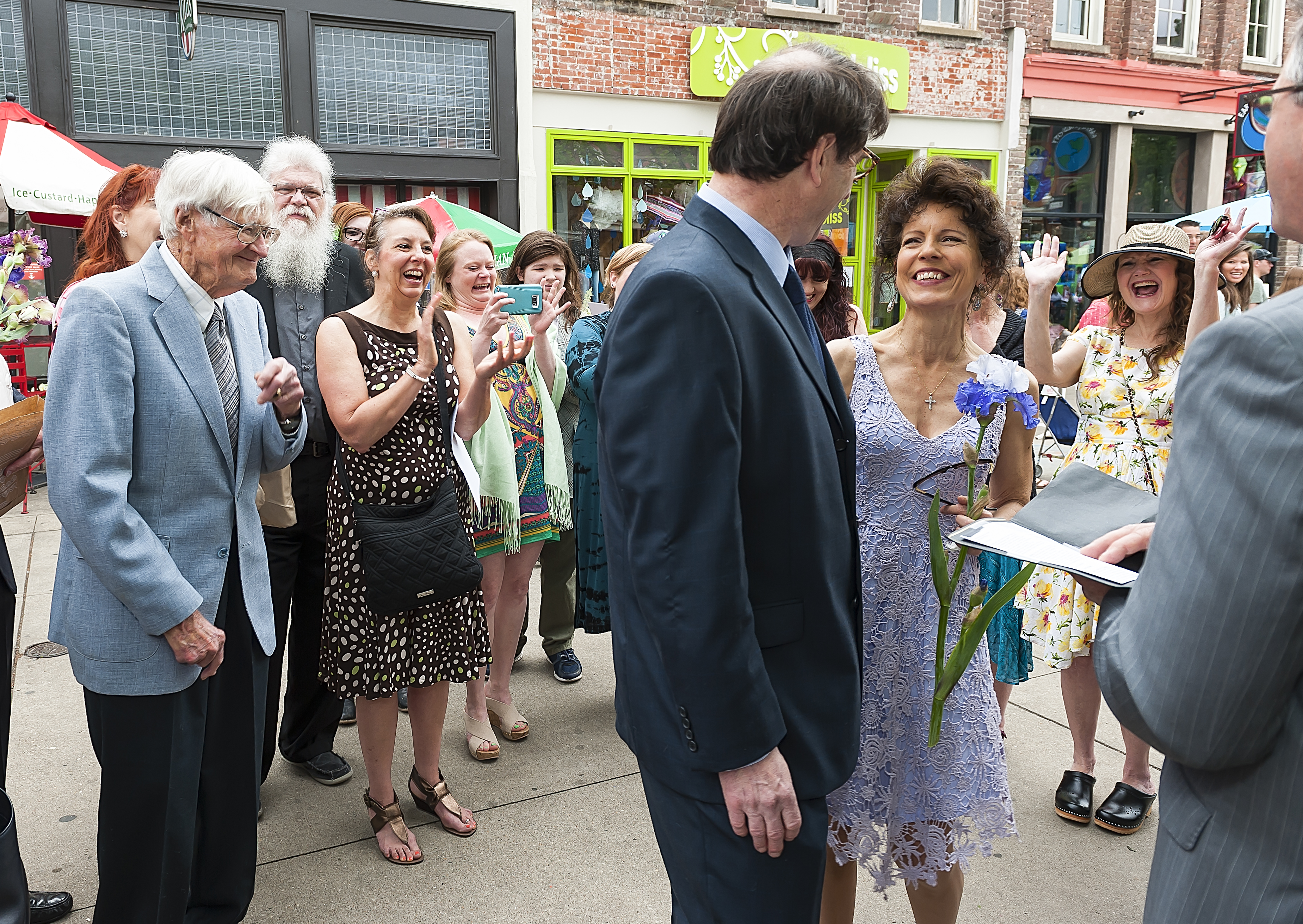
Hijinks during the wedding as Tom and Laura loudly and emphatically answered, "I do!" Tom's father, Tom Sr., is shown in the blue suit on the left.

Hijinks ensued during the wedding as Tom and Laura loudly and emphatically answered, “I do!” Tom III’s father, Tom Jr., is shown in the blue suit on the left.

The rest, as they say, is history! Their chemistry was palpable; their love was undeniable; so on Market Square in Knoxville, where they first met, they were married by Laura’s pastor last Saturday, April 23.

As it happened on the square that day, Tom and Laura were surrounded by a small group of friends and family–as well as a few of the thousands of people who were expected in downtown Knoxville for a celebration of all things Italian at our city’s 15th annual Rossini Festival.

Laura was dressed in a lavender-colored, sleeveless v-neck dress with lace overlay. She carried a single purple iris grown by Tom’s father, Tom Parkhill Jr. (the groom is actually Tom Parkhill the third) the internationally recognized and award-winning iris grower and hybridizer who was featured in an article about his amazing iris-related accomplishments in the Knoxville paper three years ago.

http://www.knoxnews.com/entertainment/life/sixty-years-of-raising-iris-lead-tom-parkhill-to-top-recognition-by-american-iris-society-ep-3582608-355843231.html

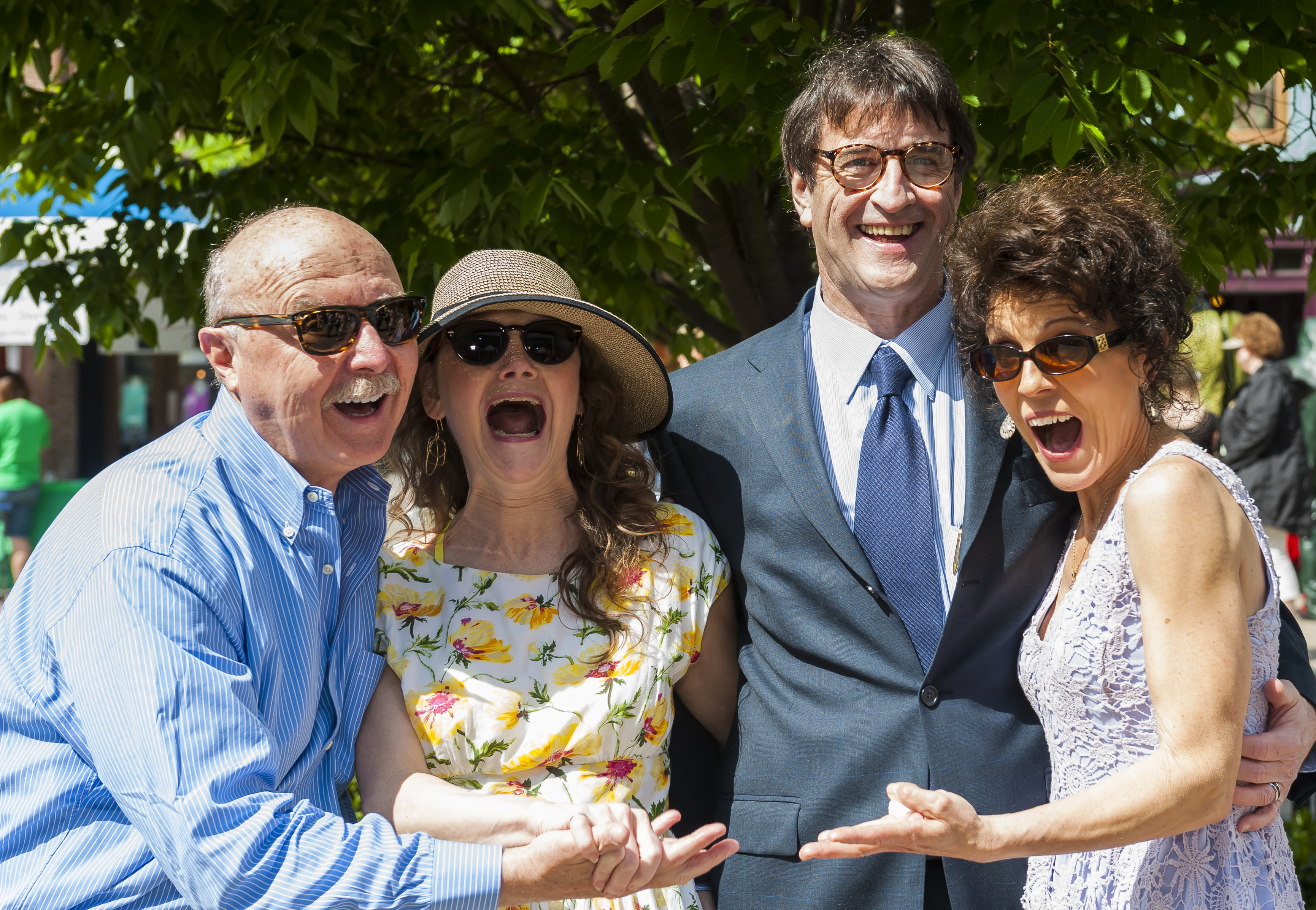
The wedding's photographer, my husband Kurt Weiss, yours truly, Tom, and Laura just after the wedding.

The wedding photographer, my husband Kurt, yours truly, Tom, and Laura at the wedding.

Tom’s father was led to his abiding interest in what he calls “the finest flower on earth” by his late wife Grace’s love for irises. It was perfectly fitting that Tom’s mother’s favorite flower–grown by his father–should be the flower carried by his bride.

As belly dancers gyrated on the stage of Market Square and their music pulsed from the loudspeakers near the wedding party, curious onlookers decided they had happened upon the ultimate Rossini anecdote: a wedding in progress. And so it was. But the joyous wedding continued with its serendipitous perfection.

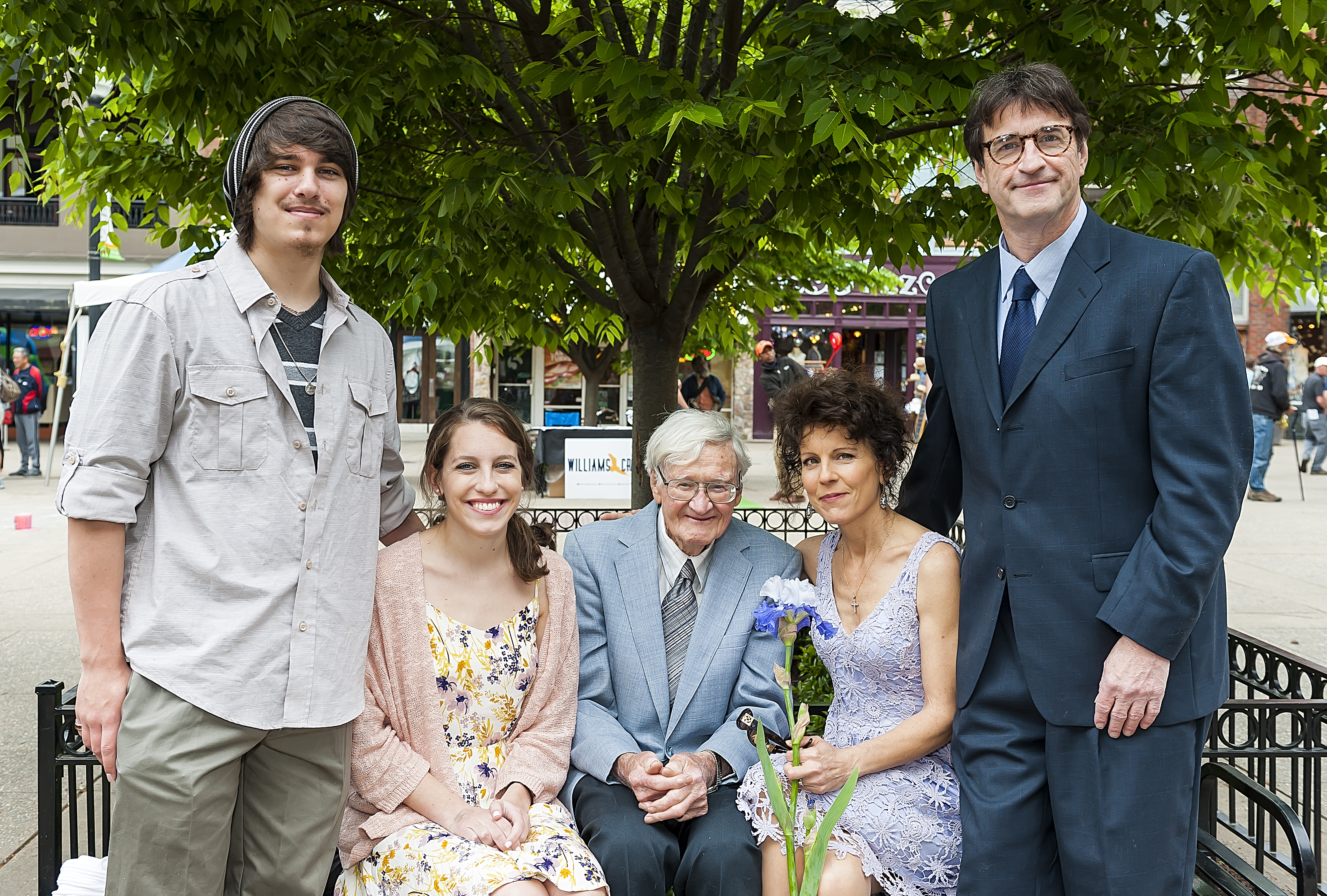
Laura's son James and her daughter Victoria, Laura and Tom at the wedding.

The happy wedding family: Laura’s son James and daughter Victoria, Tom Jr., Laura, & Tom III.

Laura’s jubiliantly smiling daughter, Victoria, spoke of her disregarded advice to her mother about not dating, then read apt lines from Jane Austen’s romance novels followed by Laura’s son, James’s reading of a sonnet from Shakespeare. The pastor read appropriate passages from the Bible followed by the vows and rings. He said richer, poorer; sickness, health, forsaking all others–then he proclaimed them: Mr. and Mrs. Tom Parkhill! Our own Laura and Tom!

Radiant Laura and Tom kiss just after they cut the cake.

Radiant Laura and Tom kiss just after they cut the cake.

Two people were never more in love than Laura and Tom. I know, many have loved–maybe as much as–but never more than this deliriously happy couple! When you wait for your life’s partner a good chunk of your adult life, the taste, smell, and glorious abandon of love is all the sweeter. And so it is for Tom and his Laura.

In the middle of the Rossini Festival’s carnival atmosphere, the small wedding party walked together across the square to the Tupelo Honey Cafe for brunch followed by a delicious German chocolate cake made by one of Laura’s dear friends.

After Tom and Laura cut the cake, Laura shared the story of the wedding ring she wore on her finger. When Tom was a young man, his beloved mother Grace set aside a beautifully appointed, family heirloom ring for Tom to present to the woman he would like to marry. Grace passed away last year, just a few months after Tom and Laura began dating.

Laura wearing the family heirloom engagement ring holding Tom's hand.

Laura wearing the family heirloom engagement ring holding Tom’s hand.

Tom’s love for Laura led to only one conclusion: he wanted to marry Laura and spend his life with her. He remembered the engagement ring his mother had so tenderly put away for this special moment. Tom’s father set upon the task of locating the ring. To their great joy, he found where Grace had put it for safekeeping years ago.

We will just need to get the ring sized to fit you, Tom said, but Laura tried it on and, to their amazement, the ring was a perfect fit–just as the couple who were so obviously made for each other: Laura and Tom Parkhill.

//Anna – 4/28/2016


Posted in Blooming, Childhood, Creativity, Happiness, Joy (Joie de General), Knoxville, Stage, The Arts, Uncategorized, Wonder, Writing | Tagged , , , , , , , , | 8 Comments

Our Corner That Keeps Flapping Around

Daddy with Justin around 1996.

Daddy showing his exuberant personality with my son (and his grandson) Justin in 1996.

Nearly twenty years ago, my father Roy Allen retired at the age of 62. Daddy’s passions were (1) his family (especially his fellow sports maniac, his grandson Justin), (2) Lady Vol basketball, (3) New York Yankees baseball, and (4) traveling with Mama to the annual tournaments the Lady Vols played in places like Alaska, Italy, Greece, and Hawaii.

Around 10 years ago, however, we noticed a significant change in Daddy as he increasingly could no longer tolerate his former joys of attending basketball games, traveling with the Lady Vol basketball team, or even joining us for family birthday dinners. His behavior became slowly more paranoid and erratic, and inexorably he withdrew from nearly everything around him.

My father Roy at the hospital on October 13, 2015.

Daddy in the hospital on October 13, 2015.

In October 2015 the decline reached a critical juncture as we were given information about hospice and other difficult choices when my 6’2″ father was hospitalized weighing just 133 pounds–only a little more than I weighed at 5’4″. Having been diagnosed a few years ago with Alzheimer’s type dementia, Daddy was now refusing to eat or take his medication, ending in too many ghastly moments of belligerence and paranoia — and eventually to dire consequences. If he wouldn’t eat, he couldn’t live. Yet, alongside his illness, Daddy had a dream: to be best man at his grandson Justin’s wedding.

With his sweet sentimental eagerness, Daddy got out ahead of the game plan on this budding romance. Justin had started attending church with my parents where Tracy played the piano for services and attended with her parents. Daddy urged Justin to ask her out, but Justin did not think it was appropriate for them to date in view of their 10-year age difference. “I’m too old for her, Papaw,” he said.

But eventually Justin decided to ask her out, and he and Tracy were delighted (and a bit surprised) when their first date was full of laughter, and they found they had many things in common. At church the next Sunday, Daddy told Tracy’s mother, Vicky, that Justin and Tracy were going to get married and he was going to be Justin’s best man. Vicky laughed, nervously I’m sure, and said they should not get ahead of themselves, since the couple had only had one date. But Daddy’s prediction was accurate, their chemistry was palpable, and soon Justin and Tracy were inseparable and deeply in love.

After a year or so, Justin asked the love of his life, Tracy (his Duchess, as he calls her), to marry him, and they set the wedding for September 4, 2016. When my father’s decline came to a crisis point in October, the wedding was nearly a year away and, in Daddy’s weakened condition, we did not think he could make it. Tracy took the situation in hand and suggested moving the wedding to March to increase the likelihood that Daddy could attend. We were hopeful that perhaps Daddy might improve and live long enough to realize his dream to “stand up” with Justin at his wedding.

At Oakwood Senior Living facility, Daddy with Tracy and Justin on Thanksgiving 2015.

At Oakwood Senior Living facility, Daddy with Tracy and Justin on Thanksgiving 2015.

At the hospital, followed by the rehabilitation center, Daddy made progress: he ate a little more, we discovered a medication he could tolerate that addressed his paranoia, and slowly we worked on assessing the long list of medications he had been prescribed throughout the years. It was obvious Mama could no longer care for Daddy at home, so we began what we feared would be a long process to find somewhere suitable. We were shocked that the first place we visited was brand new, well appointed, conveniently located, and affordable. Voila! We had a plan.

Miraculously Daddy loved the facility, the food, his fellow residents, and began to gain weight and strength. He took his medication with no hesitation and acted more like the father I remember from a decade or so ago. Instead of funeral plans, we had the amazing gift of Daddy: smiling, making jokes, laughing with us, and celebrating with high fives after he placed the final pieces in the 100-piece puzzles we worked together.

By Thanksgiving, Daddy could walk steadily on his own, and in the new year he began asking daily how many days it was till the wedding. We helped him get fitted for his tuxedo, and as February came to an end, the wedding was only six days away.

The groom Justin; his best man Daddy; and the groomsmen Carter, Mark, and Corey wait for the bride.

The groom Justin; his best man Daddy; and the groomsmen Carter, Mark, and Corey wait for the bride.

Despite Daddy’s progress, Mama decided against his participation in the rehearsal and rehearsal dinner the night before the wedding. So it was that the wedding day of March 6, 2016, dawned sunny and mild with Daddy rested and ready and eating a hearty breakfast.

After lunch Mama helped him into his tux, as he was eager to see Tracy and Justin ever so happily married and do his duties as best man. Since Daddy’s memory is sketchy, one of the groomsmen was recruited for one of his duties: holding onto Tracy’s wedding ring.

Tracy and Daddy show their mutual affection just after the wedding with Mama in the left foreground and reflected beside Tracy.

Tracy and Daddy share their mutual affection just after the wedding with Mama in the left foreground and reflected in the glass beside Tracy.

Finally it was the appointed hour for the groom and his best man to enter from the right and stand before the wedding guests as the groomsmen accompanied the women of the wedding party to the front. As I sat down on the front row on the groom’s side, I noticed Justin and Daddy were holding hands. Through misty eyes, I watched Daddy standing tall, erect, and serious about his duty as he and Justin stood together waiting for the bride to enter on the arm of her proud father, Ronnie.

Daddy holding onto Justin's arm after the wedding.

Daddy showing his characteristic smile as he holds onto Justin’s arm after the wedding.

Breathtakingly lovely in her white dress, Tracy came down the aisle and was given a sweet kiss by her father. She and Justin exchanged vows filled with the love that was apparent in their eyes. Just before the pastor called for the rings, Daddy grew shaky and sat down beside Mama on the front row. A few moments later Tracy’s wedding ring made its way down the row of groomsmen for Justin to place proudly on Tracy’s finger.

The hubbub of wedding guests moved toward the reception area while the main room was prepared for the wedding dinner. As for our family, we were filled with joy to see Daddy realize his dream to be Justin’s best man — just as we were elated to see Justin realize his dream of marrying his lady love Tracy with Daddy at his side.

The wedding photographer captured Daddy in his New York Yankees cap leaving the wedding on the arm of my sister Lisa.

The wedding photographer captured Daddy in his New York Yankees cap leaving the wedding on the arm of my sister Lisa.

Knowing Daddy was tired from the unaccustomed activity and excitement, Mama moved him to a table where he sat until he was needed for picture taking — which puts me in the mind of an apt quote I discovered a few years ago.

Happiness is excitement that has found a settling down place, but there is always a little corner that keeps flapping around.

 ~ E. L. Konigsburg, American writer & illustrator (1930 – 2013)

Daddy is our blessedly sweet corner that keeps, ever so exuberantly, flapping around.

//Anna – 3/31/2016


Posted in Autobiographical, Courage, Family, Happiness, Joy (Joie de General), Love, Tribute, Wonder, Writing | Tagged , , , , , , , | 3 Comments

I’m a Dancing Girl

loreena b:w girl dancingI have always been drawn to people and communities who dance. My theory is that when a culture loses its dancing–as a community–it loses its vitality, passion, and reason for living, what the French call raison d’être.

Conversely when a culture finds its soul again and expresses its soulfulness in song and dance, it is fully alive. The cobwebs are cleared out, the blues are dispelled in a whisper, and a collective joy for live, joie de vivre is found.

The first time I danced was in the sixth grade, and the first time I square danced. The boys hated dancing, or at least that’s how I remember it. We girls would twirl and our full skirts would fly out around us as we spun. I loved dancing to the old dances that were brought over to America by our English/Irish/Scottish ancestors. The ones who were fleeing poverty or persecution, and hoping for a bit of land to farm and call their own.

A Maori communal dance in New Zealand.

A Maori communal dance in New Zealand.

When a culture loses its music and dance, it loses its way. As Americans we have become too isolated from each other–and perhaps ourselves–as we hunker down before our televisions for the midwinter of our discontent. Man- and woman-kind were not meant to be alone. We die a bit everyday when we are not connected to others.

Although hell can indeed be other people, as John Paul Sartre wrote (and being quite a bastard himself, he should know), I’ll go him one further and say hell is even more the oblivion of being alone.

Dust off your soul, find a way to dance, and look for someone who ain’t looking through you, as Bruce Springsteen wrote in his intoxicating Badlands, which is my personal anthem:

For the ones who had a notion
A notion deep inside
That it ain’t no sin to be glad you’re alive
I wanna find one face that ain’t looking through me
I wanna find one place
I wanna spit in the face of these badlands

Many a dreary day Bruce’s music has reminded me who I am. Sometimes I have grown lonesome for the days when I ran in my grandparents’ backyard while Papaw plowed the garden and Mamaw shelled butter beans on the back porch steps. I guess you could call that being lonesome for what was–or maybe what never was.

My Papaw with me, his first grandchild.

My Papaw with me, his first grandchild.

Through the rose-colored glasses of my memories, I more readily recall my beloved Papaw’s rangy, hardworking, man-of-few-words-and-an-occasional-smile side. I tend to forget his judgmental, Calvinistic, my-way-or-the-highway occasional cruelty, and his merciless teasing of my father for not being the man he wanted Daddy to be. You’d never catch my Papaw dancing. Lord no.

But I do have good memories from when I felt I might have been his favorite, the first grandchild, the oldest, and perhaps because in some ways I was so much like him. Before I fell from grace, and got a mind of my own.

When I told my grandparents I was getting a divorce–what would be the first and only divorce in our family (until my second one)–Papaw said with deathless economy, “You made your bed; you lay in it.”

Mamaw said, “But, Thomas, if she doesn’t love him, she’s doin’ the right thing, right?”

Bless her heart. Mamaw played Turkey in the Straw on the piano. She had the broad Irish smile and a quick laugh with a small lap because her belly was round and full of her own good cooking. I’ll bet Mamaw danced when she was young–in fact, I know she must have.

In Mamaw’s spirit, and in carrying on the tradition of my Mamaw’s quick, easy laugh, I dance.

And tomorrow I dance at the wedding of my son Justin–the first dance with the groom–as he marries the love of his life, Tracy. When Justin asked me what song I wanted them to play for our dance, I suggested Lee Ann Womack’s soaring anthem “I Hope You Dance”.

I hope you never fear those mountains in the distance,
Never settle for the path of least resistance
Living might mean taking chances but they’re worth taking,
Loving might be a mistake but it’s worth making . . .

And when you get the choice to sit it out or dance.
I hope you dance . . . I hope you dance.

Justin, I hope you always dance.

Anna – 3/5/16

Posted in Autobiographical, Bruce Springsteen, Creativity, Dance, Happiness, Joy (Joie de General), Love, Music | Tagged , , , , | Leave a comment

Work is a Kind of Love

~ wrote Marilyn Monroe in her recently discovered journal

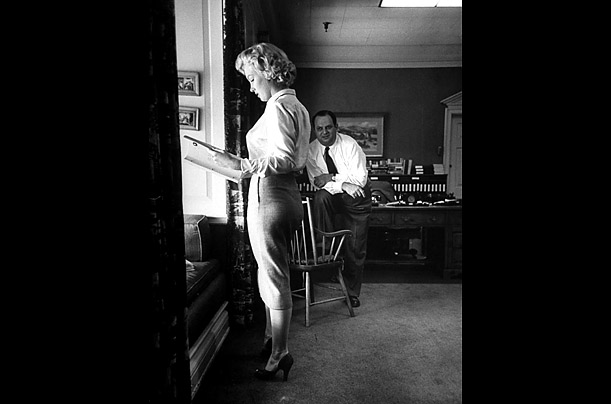
monroe color readingWhile watching the HBO documentary “Love, Marilyn”, my husband Kurt and I were surprised to hear the depth of the intelligence and insight found in Marilyn Monroe’s private thoughts as she recorded in her journals and personal papers. Her screen persona did not prepare us for the searching and self-educated-by-reading young woman who wrote so movingly.

Marilyn Monroe reading a script.

Marilyn Monroe reading a script.

As I heard her, Monroe seemed to be saying that her work was the love that never let her down and that resonated with me. After leaving my nearly 20-year communications director job at the University of Tennessee, I have come to more fully understand the gift that work has been in my life.

I loved working for the university where I essentially grew up–since I was hired when I was only 19 years old. I worked full-time and, by virtual of that fact, received two free classes each quarter which allowed me to work toward a college education I would not otherwise have been able to afford.

Although her formal education was limited, Marilyn Monroe educated herself through reading.

Although her formal education was limited, Marilyn Monroe educated herself through reading.

Knowing for myself has been my passion in life, which I think it was for Marilyn as well. All my life I have been reading, always reading, disappearing into worlds of words and imaginings of others that lived long before me or never actually lived at all. It does not matter whether I am reading fiction or non-fiction because the people I meet in books have educated me as I have shared their real or imagined lives.

Something else I shared with Monroe was the attendant shame that comes with doing without. For her, it was the lack of a real family. For me it was being poor, raised to worry about the next time Daddy would lose his job. Watching my proud parents crying in the car after their Sunday School class had taken up a collection for our family that morning. The powerlessness of not mattering in a society where money and power over your life are synonymous.

But the knowing for myself trumped the not having. My work–and from that my education—gave me a way to clothe, feed, and care for my children as a single parent and a way to ensure they were in loving, safe hands while I worked.

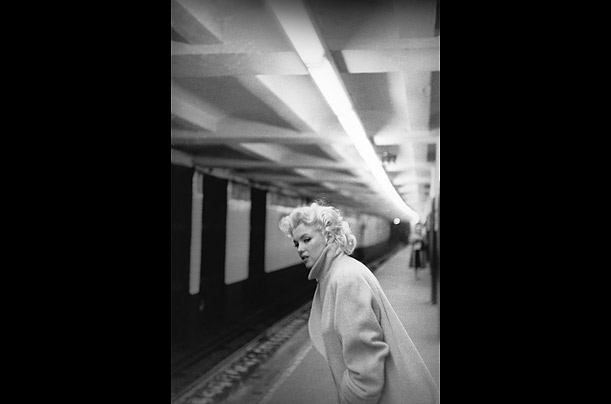
Monroe in the subway when she was taking acting classes in New York.

Monroe in the subway when she was taking acting classes in New York.

But work gave me more than that. It was my life. It was, as Marilyn described, a kind of love that I have missed in my nearly two years of freelance work experiences.

In my final five years at UT, I was promoted by a vice president who gave me a challenge and enough power to fulfill it. I worked with a communications team of four who worked together beautifully.

During one of the many reorganizations that naturally occur in large, complex organizations, our team inherited the university alumni association’s yearbook collection. This treasure trove of memories and priceless photos was perfect for use in the publications we produced to encourage charitably minded people to invest in the university’s programs.

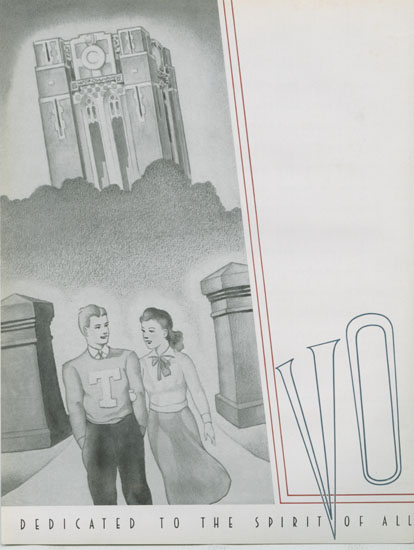
The 1940 yearbook's dedication to "all volunteers to come in the future."

The 1940 UT yearbook’s dedication to “the spirit of all volunteers to come in the future.”

Called The Volunteer after our home state’s motto, the yearbooks had been published every year since 1897, except in 1918 during the first World War. Besides the year young volunteers were lost to trench madness, we found that we were missing one other volume–the exact year of which escapes me now.

Being uncomfortably short only one piece from a complete collection inspired me to invent a way to overcome our loss. Surely there was someone who had inherited a copy of the missing volume and would not mind giving it to us.

It also occurred to me that there were graduates who had misplaced their yearbooks, never bought one and now regretted it, or conversely there surely were people who found themselves in possession of a yearbook or two for which they had no attachment or use.

Loss being the mother of invention, we began placing small blurbs in our publications about our Yearbook Exchange Program. And we got all sorts of queries and many people who had as many as four yearbooks they were glad to send us.

Brum Brumfiel's 1940 senior yearbook page.

Brum Brumfiel’s 1940 senior yearbook page.

We also heard from Oscar Marion “Brum” Brumfiel (his nickname given to him by his buddies in World War II; and yes, his name is correctly spelled without the ending “d”), a gracious 1940 UT graduate living in Minnesota who had lost his senior-class yearbook to water damage. Could we locate a 1940 yearbook for him? Joyously I could report we had an extra copy and could send it to him straight away.

Brum went on to tell me that he and his wife were amazed and elated to find that another UT alum, the incredibly successful football coach Murray Warmath, was in the nursing-home portion of the assisted-living facility where they lived.

Murray Warmath (far left) played end for the 1934 UT football team.

Murray Warmath (far left) played end for the 1934 UT football team.

Warmath had been a standout football player at the University of Tennessee, graduated in 1934, and went on to be a legendary coach who led his Minnesota Gophers team to the national championship in 1960.

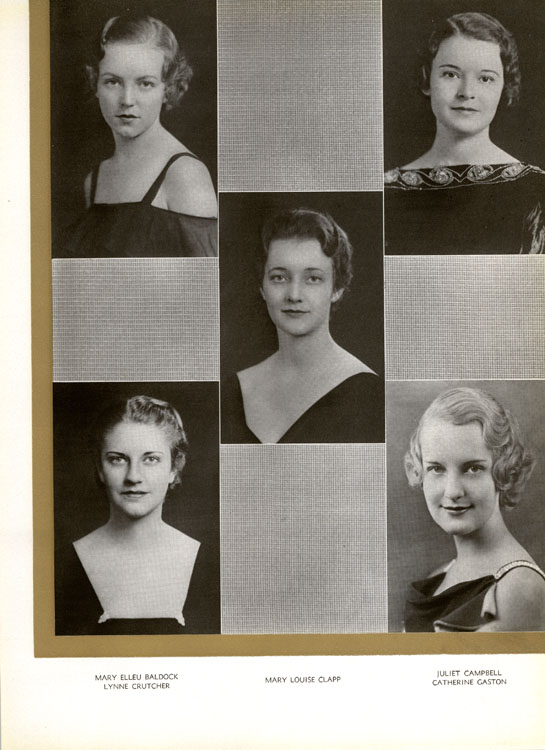
Coach Warmath’s wife, Mary Louise, had passed away a few years before. On the days when his faculties were clear, Murray told Brum about his dear wife and how she was a university beauty whose photo appeared with the other lovelies in the college yearbook.

This famous football coach who had won the highest accolades of his sport had no pictures of his dear wife from their time in college, and neither he nor his wife had bought the 1934 yearbook. He so longed to see her again.

Murray Warmath won the coveted Torchbearer award in 1934, the university's highest student honor.

Murray Warmath won the coveted Torchbearer award in 1934, the university’s highest student honor.

I checked our collection to see if we had an extra copy of the 1934 yearbook, and amazingly we did. With great anticipation, I sent the copy, via Federal Express, to the Minnesota address I had been given.

Mary Louise Clapp (center) campus beauty in 1934.

Mary Louise Clapp (center) campus beauty in 1934.

When I next heard from Brum, he described the joyous smile on the coach’s face when he saw his dear wife’s photo, so young and beautiful, just as she was when he met her and as she would always be to him. He could not understand how he came to have the book with her photo, but he was so grateful for this miraculous book that returned his wife to him. I learned recently that Murray passed away March 16, 2011, at the age of 98.

No part of my work gave me more joy than being able to make this sweet man’s dream come true: to see his wife again as she was in his memory. Work has been a privilege for me because it has given me the ability to make a difference in people’s lives.

For me, it was put so very succinctly by a woman known for style over substance: Work is a kind of love.

And so it was. And so it is.

~ Anna 7/13/2013

Posted in Autobiographical, Happiness, Ideas, Love, Photography, Screen, Tribute, Work | Leave a comment

Grace’s Son, Tom Parkhill

When I was growing up in East Tennessee just across the river from downtown in South Knoxville, I went to school with a rather extraordinary guy named Tom Parkhill.

The 1975 high school drama club with Tom Parkhill standing (front row 2nd from left) with what looks like a humongous fan.

The 1975 high school drama club with Tom Parkhill standing (front row 2nd from left) with what looks like a humongous fan.

Our parents were friends so we would occasionally go over to his house. My earliest memories of Tom are how annoying he was as my sister and I played Barbies with his sister. My memory of elementary school is hazy so I don’t remember much of him from those years, but in high school he was a singular spirit who moved among us but was ever and always just himself.

During rehearsal for "Tom Jones", Tom in the background looking at the camera.

During rehearsal for “Tom Jones”, Tom in the background looking at the camera.

Tom’s dramatic gifts were obvious as he was the star of our plays at South High School. My sister Lisa and I were in a production of “Tom Jones” with him in 1974. She was the leading lady, and my then-boy friend, Steve, played the leading man which called for my boy friend to kiss my sister. Tom Parkhill and I were character actors in this rather baudy comedy for high school consumption. I’m sure high schools would never stage this play today, but the early ’70s were a different time before politically incorrect was a concept.

Graduating from high school in 1975, Tom and I were a couple of years too young to fight in or protest against the Vietnam War. Tom seemed oblivious to political toil and trouble, as he went on to act in college and after. I read online that his credits include the movie King Kong Lives from 1986. But we were thrilled to see his angular face with a mop of black hair and glasses–sort of a grown-up version of Harry Potter before Harry was created–in TV commercials for local businesses. “There’s Tom Parkhill!”, we’d say as he sold some item long lost to my feeble memory.

In college, my friend Mary and I had arranged to meet for a movie at the Student Center, and she said a new guy she had met would be joining us. To my surprise it was Tom who I hadn’t seen in 10 or so years. How can anyone seem so at home in himself and yet so uniquely eccentric is beyond me, but Tom has always had this amazing aura of Tom-vincibility about him. Bright, a tad sardonic, quick witted, self-deprecating, and somehow obviously going places in his own way.

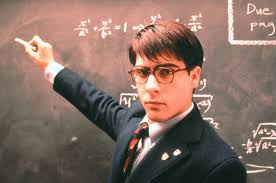
Tom Parkhill-like creation Max Fischer (as played by Jason Schwartzman) in the 1998 movie "Rushmore".

Tom Parkhill-like creation Max Fischer (as played by Jason Schwartzman) in the 1998 movie “Rushmore”.

Tom is one of the few people I think could fully inhabit the director Wes Anderson’s movies. In fact, Tom brings to mind Wes’s criminally funny, nerdtastic creation Max Fischer, as played by Jason Schwartzman in the 1998 movie Rushmore, who plows through all life throws at him and talks his way out of everything. A man of all trades, Max could do anything and still keep his Rushmore Academy school jacket pristine. Pure magic. That’s Max–and Tom.

You might think Tom and I were close friends in high school, college, or as young adults. But to be honest, our lives went in disparate ways and only serendipitously did our paths cross. But whenever I saw him, he was always, never-changingly Tom.

Tom Parkhill as the Tennessee Stage Company's founding artistic director.

Tom Parkhill as the Tennessee Stage Company’s founding artistic director.

He was far above us high schoolers in his natural skill, and it was obvious he could take it to the next level, and he did. As Tom acted in college, regional theater, movies, and commercials, I raised children and worked at the University of Tennessee, and then voila, about 10 or 15 years ago, I saw Tom had created the Tennessee Stage Company and is now its founding artistic director. He has done everything: raised funds, directed, acted, and mounted Shakespeare in the Park, then Shakespeare on the Square each summer in Downtown Knoxville–our hometown.

My husband a photographer, had a studio at the Emporium Building, and Tom’s office was right across the hall. Occasionally Tom would take afternoon naps on the couch in his office as he powered up to rehearse his thespians into the night.

Jimmy Stewart as Elwood P. Dowd in the 1950 movie "Harvey".

Jimmy Stewart as Elwood P. Dowd in the 1950 movie “Harvey”.

Last year we swooned to see the announcement that Tom was starring in the play Harvey, which was also made into the classic and beloved film starring Jimmy Stewart in the title role–one of the films Kurt and I love best. Besides Jimmy Stewart’s magical characterization, I cannot imagine a person who is more like Elwood P. Dowd than Tom Parkhill. Elwood was a gentleman, a sweet antediluvian with his throwback manner and style, an absent-minded man who cared more about people than things. Just like Tom, a singular spirit walking diffidently, but unerringly, through his time.

I was not disappointed when my husband Kurt and I watched Tom play Elwood. The play was intimately performed with the actors surrounded by the audience on four sides. Tom’s parents, Grace and Tom Sr., were there to see the Sunday afternoon performance on February 1, 2015, and I recalled my mother saying Tom’s mother had been suffering from dementia and its inevitable decline. Still both his parents were bright-eyed, alert, and listened intently to the play. At one pivotal moment, Tom’s character said his line and made a rather poignant exit. As Tom left the stage, he could hear his dear mother quietly say, “Goodbye, Son.”

Tom Parkhill as Elwood P. Dowd with Harvey, his 6-foot, 3-inch tall invisible best friend.

Tom Parkhill as Elwood P. Dowd with Harvey, his 6-foot, 3-and-a-half-inch tall invisible best friend.

Tom was incredibly moved, of course, by his mother’s sweet words, and shared them with me after the play. I introduced myself to his parents, and despite her dementia his mother remembered my parents fondly. As a surprise for me, Kurt bought the painting of Tom as Elwood with Harvey, the 6-foot-3-and-a-half-inch (invisible-to-everyone-but-Elwood) rabbit, that hung over the fireplace during the play. Tom now smiles down on me as I write on the computer in my office.

About six months later, my mother called and said Tom’s mother had passed away. Kurt and I decided we would do what little we could for Tom and go to the service. I knew next to nothing about Tom’s mother, except she was kind and a friend of my parents. At the funeral, I learned she was a pioneering woman in a number of ways, touched many lives, and was one of those remarkably special achievers. She started out life as a desperately poor girl who nevertheless got her bachelor’s degree at Berea College in Kentucky when most girls did nothing of the kind. She met her own dear Tom Sr. a bit later than most of her peers. But they were soulmates straight away, and were simply adorable together the last time I saw them.

During the service I noticed a woman sitting behind Tom, touching his back and offering comfort as the pastor told Grace’s story. I thought the young woman might be a relative since I didn’t know Tom was dating anyone. But I hoped that maybe this dark-haired, electric woman might be someone special to Tom.

After the service, I hugged him and offered insufficient, but heartfelt, words of condolence. I asked Tom if the lovely woman was a relative but was delighted to hear the two of them were dating.

Tom working back stage in 1974.

Tom working back stage in 1974.

He invited us to come to his home with other friends and family. The house was full and after many other conversations, Tom introduced me to his lady, whose name sadly I cannot recall. She made me very happy when she told me she read one of my blogpost mentions of Tom and was reassured that she should accept his kind invitation for a date.

When I heard her story about reading my blogpost and then dating Tom, I was over the moon that my words had encouraged this beautiful woman to enter Tom’s life. Words are so insignificant beside the loss of a beloved mother, so it gave me great joy to think writing about my friend Tom helped bring him companionship and warmth in his time of sorrow.

I don’t believe anyone can ever replace Tom’s beautiful mother, Grace, who I am convinced fully inhabited and lived up to her name. But he will always have her love as she is ever near him wherever he goes. When our loved ones die, we still can hum the songs they sang, hear the words they said as they enouraged us through the dark times, and feel the warmth of their knowing smiles. Forever Tom is Grace’s Son–and nothing can ever take that away.

//Anna – 1/24/2016


Posted in Autobiographical, Courage, Family, Friends, Happiness, Knoxville, Love, Stage, Tribute, Women, Writing | Tagged , , , , , , , , , , , , , , , , , | 6 Comments